High School Track Coaching in Denver for Athletes Who Want More Than Generic Workouts
RYFT helps Denver-area high school track and field athletes train with more structure, better feedback, event-specific coaching, strength support, competition preparation, and a clearer development path.
- Private coaching, track club training, offseason development, school-season support, and event-specific coaching
- Support for sprints, hurdles, jumps, throws, pole vault, distance, strength, and meet preparation
- Built for athletes chasing confidence, PRs, varsity spots, state marks, or college opportunities
- Based in Englewood near the Denver Tech Center and serving athletes across the Denver metro
What does your high school track athlete need most right now?
Answer a few quick questions and get a RYFT training recommendation based on grade, event group, season timing, current challenge, weekly availability, and bigger goals. This is a starting point, not a final prescription.
Recommended RYFT Fit
What RYFT would look at first
Complete the tool to see a likely first priority.
What this means for the family
The right training path depends on the athlete’s event, goals, school season, availability, and current challenge.
What to avoid
Avoid adding random workouts before identifying what the athlete actually needs.
Recommended next step
Start with an athlete evaluation if you are unsure.
High school track is where the sport starts to get real.
Some athletes are trying to make varsity. Some are chasing PRs, state marks, or college opportunities. Others are still finding their best event, cleaning up technique, or trying to build confidence.
RYFT helps high school athletes train with more structure, better feedback, and a clearer path forward — whether that means private coaching, track club training, event-specific support, or a combination.
- Event-specific coaching
- Private 1-on-1 technical feedback
- Track club training
- Offseason development
- School-season support
- Strength and weight lifting
- Meet preparation
- Recruiting organization
High school athletes do not all need the same setup.
Some need consistent weekly structure. Some need one-on-one technical feedback. Some benefit from both.
Best for athletes who need consistent weekly training.
- Structure and consistency
- Team environment
- Regular development
- Event-specific coaching
- Better value across a season
Best for athletes who need direct feedback.
- One-on-one attention
- Technical correction
- Flexible scheduling
- Specific event problems
- Individualized progression
Best for athletes who need a more complete support system.
- Club rhythm plus private tune-ups
- Faster technical correction
- Better planning
- Competition goals
- Recruiting or state-level ambitions
High school athletes should not be coached through a one-size-fits-all system.
A sprinter does not need the same work as a distance runner. A hurdler should not be trained like a generic speed athlete. A thrower should not be treated like an afterthought.
Sprints
Acceleration, max velocity, starts, relays, 60m, 100m, 200m, 400m, and race modeling.
Sprints →Hurdles
Rhythm, clearance, lead/trail mechanics, touchdown positions, confidence, and short/long hurdle execution.
Hurdles →Horizontal Jumps
Long jump, triple jump, approach rhythm, takeoff mechanics, landing, and board accuracy.
Horizontal Jumps →High Jump
Curve rhythm, approach consistency, penultimate mechanics, takeoff posture, and bar clearance.
High Jump →Throws
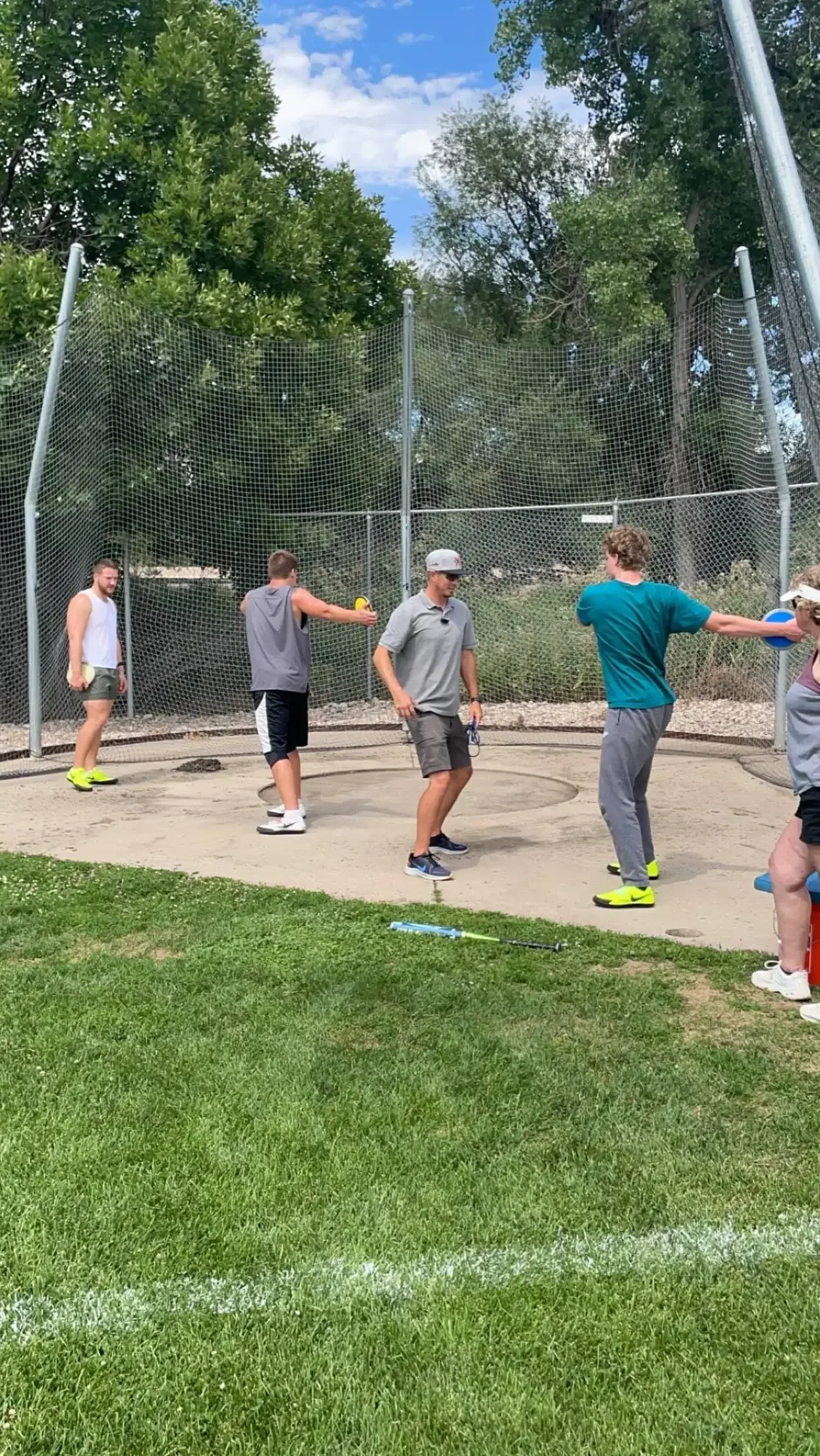
Shot put, discus, javelin, hammer, weight throw, positions, rhythm, release, and strength transfer.
Throws →Pole Vault
Approach, plant, takeoff, swing, inversion progressions, confidence, and bar clearance.
Pole Vault →Distance
Mechanics, pacing, durability, speed support, race strategy, cross country, 800m, mile, and 5K.
Distance →Strength
Weight lifting, speed-power support, durability, posture, force production, and event transfer.
Strength →High school track seasons move fast.
Once school practice starts, athletes are juggling team workouts, meets, homework, travel, fatigue, and limited event-specific attention.
RYFT helps athletes prepare before the season begins and stay supported during the season when they need extra help.
- Sprint mechanics and acceleration
- Hurdle rhythm and mobility
- Jump approach consistency
- Throws technique and power development
- Pole vault progressions
- Distance mechanics and speed support
- Strength, mobility, and durability
- Meet preparation and competition strategy
- Confidence going into school practice
- Consistency between club, private, and school training
For college-bound athletes, training needs to become more intentional.
Not every high school track athlete wants to compete in college. But for athletes who do, the process needs more than hard workouts.
College-bound athletes need better event technique, stronger training habits, smarter meet preparation, organized performance information, and a realistic understanding of what college coaches are evaluating.
- Event-specific technical development
- Year-round training structure
- Offseason and preseason preparation
- Meet strategy and competition planning
- Strength and movement development
- Athlete profile organization
- Coach email templates
- Realistic school-fit conversations
- Preparation for the jump to college training
RYFT does not promise scholarships, roster spots, admissions, or recruiting outcomes. The goal is to help families make the process clearer, more organized, and more realistic.
Most athletes do not need more randomness.
Many high school athletes work hard but still lack the right structure, event-specific coaching, and competition plan.
Only training during the school season.
Progress is harder when athletes wait until the season starts to build speed, strength, technique, and confidence.
Doing generic speed training.
Sprinting, hurdling, jumping, throwing, vaulting, and distance running all need different coaching details.
Ignoring technique.
Fitness matters, but many athletes are limited by positions, rhythm, mechanics, timing, or event execution.
Lifting without transfer.
The weight room should support the event, not create fatigue or chase numbers disconnected from performance.
Waiting too long on recruiting.
Athletes interested in college track need marks, video, academics, communication, and a school-fit plan.
Guessing the next step.
Parents should not have to guess whether the athlete needs club, private, strength, meet prep, or recruiting support.
High school athletes make progress when coaching gets more specific.
Number one ranking in Colorado in multiple events.
“Great coach. Helped my kid to a number one ranking in Colorado in multiple events. Highly recommended!!!!” Kyle D. — RYFT review
Added 10 feet to a shot put PR.
“Great coach. I added 10 ft to my shot put PR in just one season.” Maxwell P. — Thrower
Improved greatly while enjoying every practice.
“Jeremy is an amazing coach. He has been training my daughter for two years. She has improved greatly while enjoying every practice.” Jana E. — Parent of RYFT athlete
Based in Englewood, serving high school athletes across the Denver metro.
RYFT is based in Englewood near the Denver Tech Center and works with high school athletes from Denver, Aurora, Centennial, Littleton, Greenwood Village, Highlands Ranch, Parker, and surrounding communities.
Training locations may vary by season, weather, facility access, and training type.
High School Track Coaching Near Denver
RYFT provides high school track coaching in Englewood for Denver-area athletes who need private coaching, track club training, offseason development, school-season support, event-specific coaching, strength training, competition prep, and recruiting organization.
RYFT supports high school sprinters, hurdlers, jumpers, throwers, pole vaulters, distance runners, multi-event athletes, and athletes who want a clearer path for school-season and offseason development.
High School Track Coaching FAQs
Is RYFT a good fit for high school track athletes?
Yes. RYFT is built for high school athletes who want better coaching, a stronger training environment, and more event-specific development. Athletes can be brand new or already competing at a high level.
Do you coach all high school track and field events?
RYFT supports sprints, hurdles, jumps, throws, pole vault, middle distance, distance, strength training, and meet preparation.
Is this only for advanced athletes?
No. Some athletes come in with years of experience. Others are still learning the basics. The right fit depends on the athlete’s goals, coachability, schedule, and training needs.
Should my athlete choose private coaching or track club?
Private coaching is usually best for athletes who need one-on-one attention, technical work, or flexibility. Track club is usually best for athletes who want regular structure, event-specific coaching, and a team environment. Some athletes benefit from both.
Can RYFT help during the school season?
Yes. RYFT can support athletes before, during, and after the school season depending on the athlete’s schedule, school training load, event, and goals.
Can RYFT help with college recruiting?
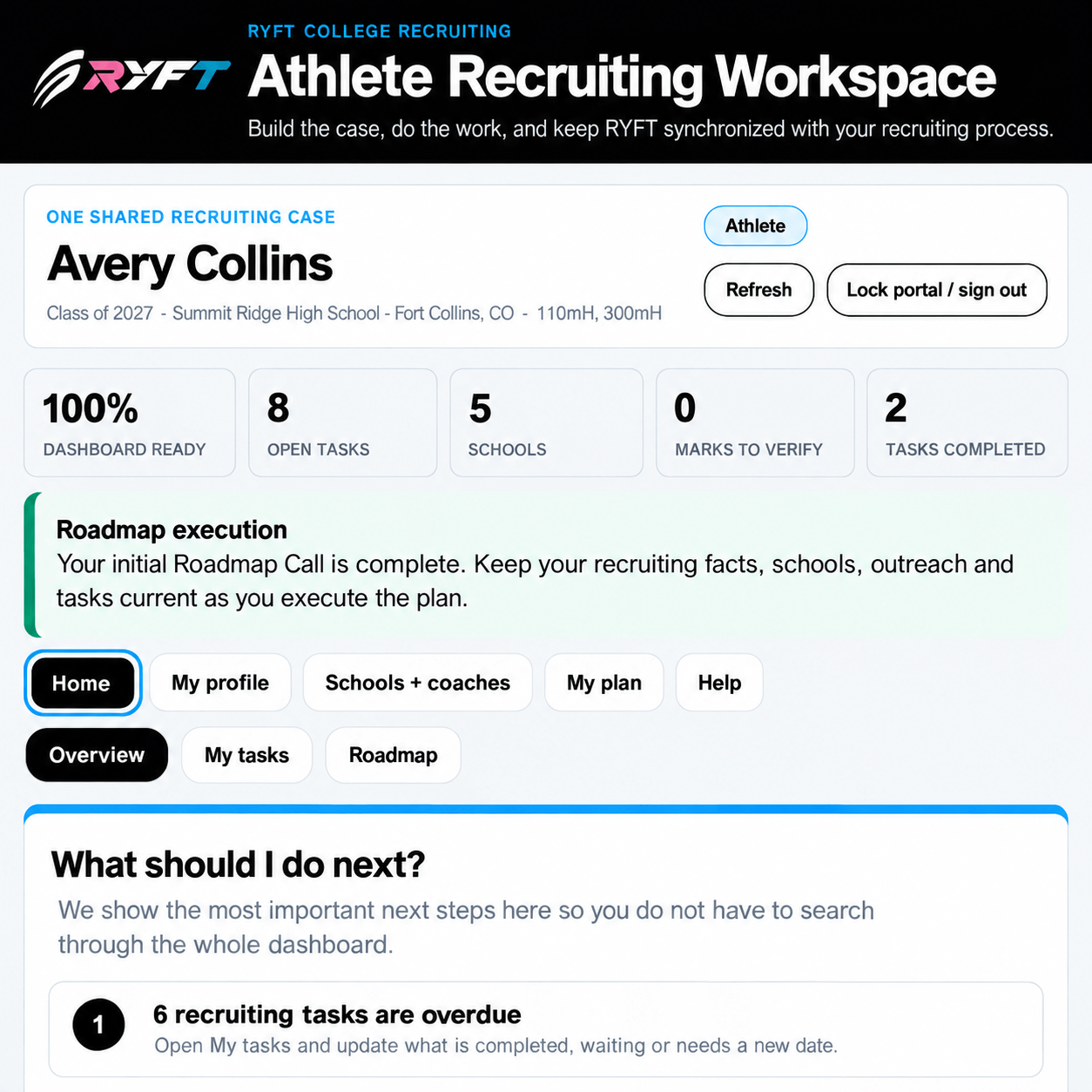
Yes. RYFT offers the College Recruiting Roadmap for athletes and families who need help organizing marks, video, academics, coach emails, school-fit thinking, and next steps.
Can RYFT help if my athlete already has a school coach?
Yes. RYFT can supplement school training through private technical work, event-specific coaching, offseason development, strength support, competition prep, or recruiting organization.
How do we get started?
Start with the athlete evaluation. RYFT will review the athlete’s goals, event interests, experience level, schedule, and current training situation, then recommend the best next step.
Ready to find the right high school training path?
Whether your athlete needs private coaching, club training, school-season preparation, recruiting guidance, or event-specific support, RYFT can help point you toward the best next step.