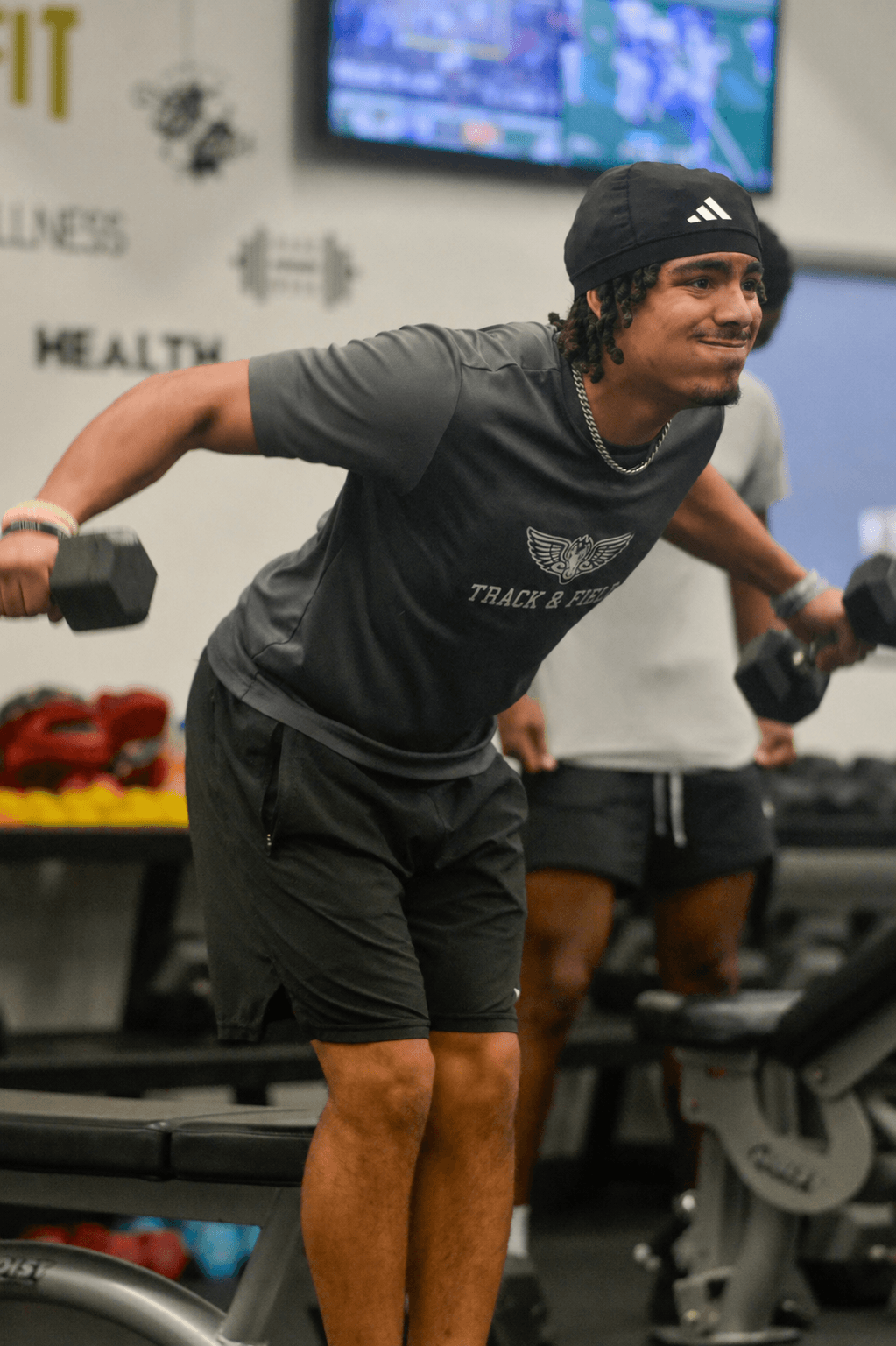
Strength & Weight Training

Strength & Weight Training for Track and Field Athletes

Event-specific weight room support for athletes who need strength, power, posture, durability, coordination, and better transfer into their actual track and field events.

  • Weight lifting designed to support the athlete’s event, not distract from it
  • Strength work for speed, power, posture, durability, force production, and long-term development
  • Support for sprinters, hurdlers, jumpers, throwers, pole vaulters, distance runners, and multi-event athletes
  • Integrated with RYFT Track Club, private coaching, event-specific training, and seasonal planning
Speed Power Durability Posture Event Transfer Weight Lifting
Event-Specific Strength

Track athletes do not all need the same weight room plan.

A sprinter, hurdler, jumper, thrower, pole vaulter, and distance runner have different event demands. Strength training should reflect those differences.

Jumps + Pole Vault

Strength that supports takeoff and elastic ability.

Jumpers and vaulters need strength that supports approach rhythm, takeoff positions, reactive qualities, body control, and safe progressions.

Jumps →
Throws

Strength that transfers into the throw.

Throwers need strength that supports positions, rhythm, sequencing, blocking, release mechanics, and event-specific power instead of lifting numbers alone.

Throws →
Distance

Strength that supports durability.

Distance athletes need strength that supports posture, mechanics, tissue capacity, durability, and training consistency without adding unnecessary fatigue.

Distance →
Youth Athletes

Strength that starts with movement quality.

Younger athletes should build safe movement basics, coordination, body control, general strength, and confidence before chasing heavy loads.

Youth Track →
High School Athletes

Strength that supports long-term development.

High school athletes need strength training that fits their event, season, readiness, schedule, and competition goals.

High School Track →
What Strength Can Improve

The goal is not lifting just to lift.

The goal is to help the athlete move better, produce force more effectively, handle training demands, and show up more prepared for competition.

Strength Training Can Support
  • Force production
  • Speed and power
  • Posture and positions
  • Balance and stability
  • Movement quality
  • Coordination
  • Durability and resilience
  • Readiness for competition
  • Confidence in training
  • Long-term athlete development
How It Fits RYFT Training

Weight lifting should fit the bigger training plan.

Strength work should not compete with technical training. It should support the athlete’s event, season, recovery, and long-term path.

01

Track Club

For club athletes, weight lifting can fit into the weekly training rhythm when it supports event development and the athlete’s membership plan.

Track Club →
02

Private Coaching

For private coaching athletes, strength work can be tied more directly to a specific event, technical limitation, or training goal.

Private Coaching →
03

Event-Specific Training

For sprinters, jumpers, throwers, hurdlers, vaulters, and distance runners, the strength plan should reflect the demands of the event.

Training Overview →
04

Competition Prep

Meet weeks may affect lifting volume, intensity, exercise choices, and recovery so the athlete can compete with better readiness.

Competition Prep →
Weight Lifting Schedule

Weight Lifting runs Monday through Friday from 7:00–8:30 PM.

Weight Lifting takes place at the indoor DTC location and is designed to support the athlete’s broader training plan. Whether an athlete should lift on a given day depends on age, event, readiness, recovery, membership level, and weekly training load.

Not Every Athlete

More lifting is not automatically better.

Some athletes need more strength work. Others need technical work, speed, recovery, or movement quality first.

Not Random

The lift should support the sport.

Exercise selection, intensity, volume, and timing should help the athlete train and compete better.

Who This Is For

RYFT strength support is for athletes who need more than generic gym work.

Power Athletes

Sprinters, jumpers, hurdlers, vaulters, and throwers.

Power events need strength that supports acceleration, takeoff, rhythm, positions, speed, force application, and event-specific transfer.

Durability Athletes

Distance runners and multi-sport athletes.

Strength can support durability, posture, mechanics, coordination, tissue capacity, and training consistency without becoming the main event.

Serious Competitors

Athletes who want a more complete development system.

Strength work becomes more useful when it connects to technical coaching, seasonal planning, meet preparation, and long-term goals.

Common Mistakes

The weight room can help or hurt depending on how it is used.

A bad strength plan can add fatigue, reinforce poor positions, ignore the season, or distract from the athlete’s real event needs.

Lifting like a bodybuilder.

Track athletes do not need random bodybuilding volume that leaves them sore, slow, or disconnected from their event work.

Chasing numbers with no transfer.

A bigger lift is only useful if the athlete can still move, sprint, jump, throw, vault, hurdle, or compete better.

Ignoring the season.

The strength plan should change depending on offseason, preseason, competition season, recovery needs, and meet timing.

Copying another athlete’s plan.

A thrower, sprinter, jumper, hurdler, vaulter, and distance runner should not all have the same exact emphasis.

Lifting through poor readiness.

If an athlete is exhausted, in pain, or overloaded, the right answer may be adjustment, recovery, or technical work instead.

Separating lifting from coaching.

The weight room works best when it is connected to the athlete’s actual event and development plan.

Parent Clarity

Parents should understand why their athlete is lifting.

The answer should not be “because everyone lifts.” RYFT wants the weight room to make sense inside the athlete’s full training picture.

Should my athlete lift?

Maybe. It depends on age, readiness, event, training history, goals, and current workload.

How often?

The schedule provides access, but frequency should match the athlete’s plan and recovery.

Is lifting safe?

Strength training should be appropriately coached, progressed, and matched to the athlete’s level.

Does lifting replace event training?

No. The weight room supports the event. It should not become a replacement for technical coaching.

Denver Metro

Strength training based in Englewood near the Denver Tech Center.

RYFT Athletics is based in Englewood near the Denver Tech Center and serves athletes from Denver, Aurora, Centennial, Littleton, Greenwood Village, Highlands Ranch, Parker, and surrounding communities.

Strength training availability may vary by season, membership level, facility access, athlete needs, event group, and training path.

Strength and Weight Training for Track Athletes Near Denver

RYFT provides strength and weight training support for Denver-area track and field athletes who need training that supports speed, power, posture, durability, movement quality, and event-specific development.

Strength support can help sprinters, hurdlers, jumpers, throwers, pole vaulters, distance runners, youth athletes, high school athletes, college athletes, adult athletes, masters athletes, and adaptive athletes depending on goals, readiness, and training fit.

FAQ

Strength & Weight Training FAQs

Do track and field athletes need weight training?

Many athletes benefit from weight training when it is matched to their event, age, training history, readiness, and season. The goal is not random lifting. The goal is strength that supports performance and development.

Is the lifting the same for every athlete?

No. A sprinter, thrower, jumper, hurdler, vaulter, and distance runner can have very different strength needs. A good plan should reflect the athlete in front of us.

When is Weight Lifting?

Weight Lifting runs Monday through Friday from 7:00–8:30 PM at the indoor DTC location. Whether an athlete should lift every day depends on their training plan, event group, readiness, and recovery.

How does strength training fit with Track Club?

For some club athletes, strength work may be part of the broader weekly training rhythm. Availability and emphasis can vary by season, membership level, facility access, and training plan.

Can private-coaching athletes also get strength support?

Yes. Private coaching can include strength integration when it supports the athlete’s event, technical needs, and goals.

Is this just for advanced athletes?

No. Strength work can help athletes at different stages, but it should always match the athlete’s current level, readiness, movement quality, and needs.

Can lifting make athletes slower or too bulky?

Poorly matched lifting can create unnecessary fatigue or weight-room adaptations that do not help the event. Properly planned strength training should support speed, power, durability, and movement quality.

How do I get started?

Start with an athlete evaluation. RYFT will review the athlete’s event, goals, training history, schedule, and current needs, then recommend the best training path.

Ready to build strength that supports the sport?

Whether your athlete needs club training, private coaching, event-specific strength support, or a more complete development system, RYFT can help point them toward the right path.